Manual cleaning of ultrasound probes is time-consuming, inconsistent, and prone to human error, creating a significant risk for healthcare-associated infections (HAIs). Automated cleaning systems offer a standardized and repeatable workflow that improves decontamination prior to reprocessing, and ultimately reduces operational burden and long-term financial risks.
The Scope of the Problem: Healthcare-Associated Infections
Healthcare-associated infections (HAIs) pose a substantial threat to patient safety and place a heavy financial burden on healthcare facilities. These costs are estimated at around $96 billion to $147 billion annually in direct, indirect, and nonmedical social costs.1Furthermore, the Centers for Disease Control and Prevention (CDC) estimates that roughly 3% of all patients treated in medical facilities contract HAIs.2
Semi-critical medical devices, such as ultrasound probes that contact mucous membranes or non-intact skin, contribute significantly to these statistics due to the narrow margin of safety involved in their reprocessing.1 Failure to adhere to rigorous reprocessing protocols for these devices, including endoscopes and endocavity probes, can leave the instrument contaminated, increasing the chances of spreading HAIs and jeopardizing patient health.1
A significant challenge in understanding the true extent of the problem is the limited oversight and reporting within certain departments. Jill Holdsworth, CIC, FAPIC, NREMT, CRCST, CHL, Medical Affairs Manager at CS Medical, thinks the actual statistics may be obscured. Holdsworth states, “Currently, the Infection Prevention (IP) department’s required workload doesn’t include surveillance and reporting of procedures that are performed primarily with scopes and/or probes. This can significantly skew the view of the scope of the problem that we may potentially have.” She adds that IP department staffing levels do not account for the full range of procedures that should be monitored, leaving many issues unaddressed due to a lack of mandatory reporting requirements and dedicated resources.3 To combat these risks, facilities must focus on implementing standardized, rigorous reprocessing protocols that eliminate human variability and ensure proper cleaning prior to reprocessing.
The Imperative of Cleaning
One critical step that determines the success of the entire reprocessing cycle is cleaning, which is the essential prerequisite for successful high-level disinfection (HLD). Cleaning is the process by which soil and contaminants are physically removed from an instrument; especially in the medical industry, the cleaning step is non-negotiable because reusable medical devices, even when used with sheaths, become contaminated with soil, organic material, and microorganisms.4 Cleaning alone can substantially reduce the microbial load on contaminated devices by 4–6 log10.5 This reduction is necessary because lower microorganism numbers are easier to kill during subsequent disinfection.
When soil and organic debris remain on a probe prior to HLD, the disinfectant cannot work effectively. Debris and foreign material can directly inhibit or inactivate certain disinfectants, or even physically block the disinfectant from reaching the device surface and contacting the microorganisms.5
If a device is not cleaned properly, bacteria can survive and begin to form protective structures known as biofilms, or microbial communities that tightly attach to surfaces and cannot be easily removed. Bacteria living within these protective structures are notoriously difficult to treat, becoming up to 1,000 times more resistant to antimicrobials and disinfectants than free-living bacteria.6
Holdsworth stresses the consequences of this oversight, stating, “Residual soil will inhibit the appropriate disinfectant action when going through the high-level disinfection cycle.” She further warns, “Improper cleaning can also lead to biofilms forming on the probe, especially in the cracks and crevices that aren’t effectively cleaned each time.” Ultimately, this can lead to cross-contamination and/or transmission of infection. The greatest defense against these highly resistant microbial communities is meticulous cleaning after every use to prevent biofilm formation altogether.
Bottlenecks of Manual Cleaning
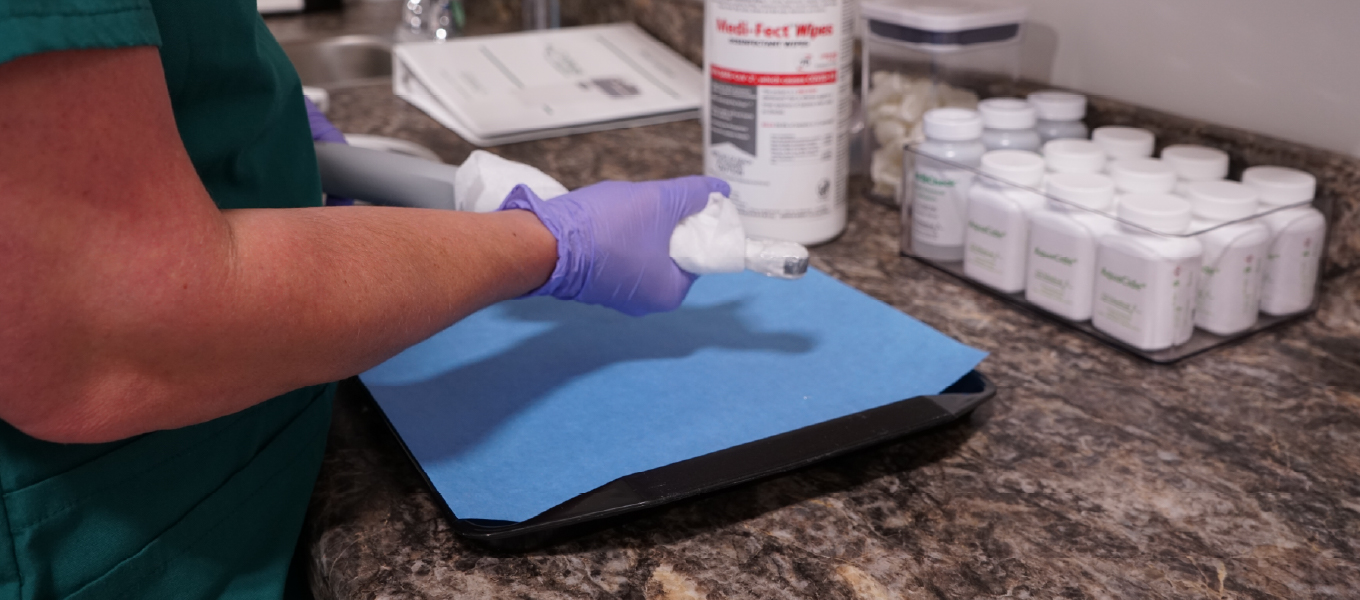
Traditionally, cleaning ultrasound probes relies on manual processes involving wiping with impregnated wipes or submerging the probe in large basins with detergent. This manual approach poses several compliance risks due to a fundamental lack of standardization.
Inconsistency and Operator Dependence
The efficacy of manual cleaning is highly dependent on the operator, resulting in significant variability in results. This inconsistency is compounded by the fact that the process itself is often described as tedious and confusing, especially for complex probes. Staff required to reprocess probes report physical discomfort, pain, and fatigue associated with the monotony of manual reprocessing, which can lead to rushed or skipped steps.7
The lack of standardization is stressed by one study comparing manual versus automated cleaning. In this study, three experienced clinicians manually cleaned 13 probes each (9 total probe models) against an automated system (Ethos®) and used “worst-case scenario” soil (75% Edinburgh Soil with 25% ultrasound gel).8 In this study, the remaining amount of protein residue varied considerably, ranging from 220–660 µg across operators.8 This variability stresses the human factor in achieving a consistently clean probe. These clinicians employed auxiliary methods to clean more challenging areas of soiled probes, including indentations.8 These methods involved using dry swabs, water-dampened swabs, or swabs wrapped with a wipe to reach contaminated areas.8 Despite these efforts, visible soil often remained within the indentations after manual cleaning, indicating that these areas are particularly difficult to clean using manual techniques.8
Variance in IFUs and Documentation Failures
The discrepancy across manufacturer instructions for use (IFUs) for different probe models amplifies the issue of operator dependence. While manufacturers must provide cleaning procedures tested and approved for each device, these procedures can differ dramatically. For example, some manufacturers’ IFUs explicitly state to “Use a soft, non-abrasive brush,” while others state, “Do not use a brush, because it may damage the transducer.”9-10 This disparity creates confusion and risk, particularly for newer or overworked staff.
The physical demands and time constraints of the clinical environment worsen human error. Manual cleaning is slow and inefficient, demanding significant attention to detail that is difficult to maintain during busy shifts. This pressure often leads to improper cleaning procedures. In the same study comparing manual versus automated cleaning, results showed that staff in clinical settings spent significantly less time cleaning (4–7 minutes) compared to optimized lab settings (14–25 minutes), suggesting that cleaning procedures in clinics may not be as stringent.8
Holdsworth suggests that compliance often starts with proper oversight and training. “The first step to being consistent with probe cleaning is to have appropriate training and competencies,” she says. “Often in healthcare facilities, competencies are not completed on an annual basis or at all.”
She also points to time constraints, stating, “We often hear about the struggle for turnover time of clinic rooms when it comes to appropriately reprocessing probes.” In fact, one multisite, observational study found that only 1.4% of endoscopes that underwent manual cleaning followed by automated disinfection were reprocessed correctly at every step.7 Most staff do not have the appropriate time resources or skillset to properly clean and disinfect devices, creating a need for a more efficient, effective approach.
The Superiority of Automation in Reprocessing Ultrasound Devices
Given the demonstrated risks, variability, and compliance failures associated with manual techniques, automated cleaning and disinfection has emerged as the superior solution for reprocessing soiled ultrasound probes.
Eliminating Variability for Consistent Results
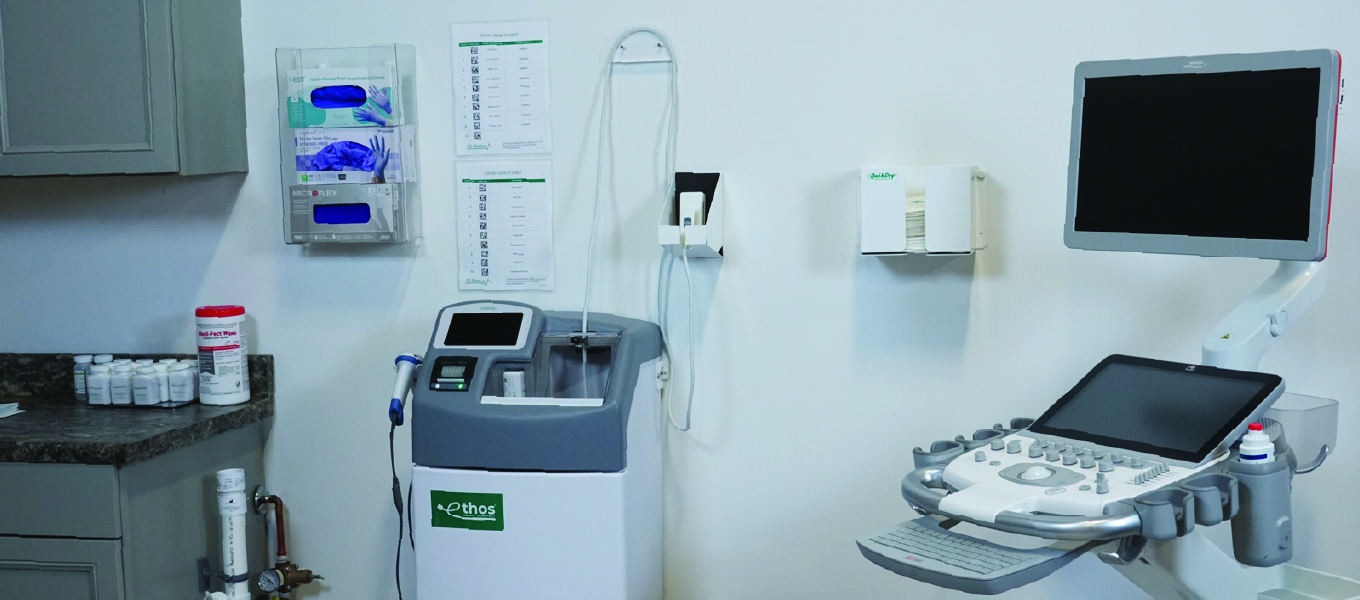
Automated systems, such as the CS Medical Ethos® Automated Ultrasound Probe Cleaner Disinfector, are specifically designed to eliminate operator-dependent cleaning errors by utilizing a single, streamlined, and consistent workflow. As Holdsworth explains, “When you can automate the cleaning process, you eliminate the risk of variability.”
This automation is critical for ensuring that the cleaning step is not inadvertently bypassed. Holdsworth notes, “We see that sometimes the cleaning step is skipped altogether, which is a significant risk to the patient and the overall disinfection process.” Automated systems enforce adherence to the protocol, ensuring cleaning is performed every time.
Compelling Evidence That Automation Achieves Best Cleanliness
In the manual versus automated cleaning study, results highly suggested the automated approach (Ethos®) was more effective.8 Visual inspection of the manually cleaned probes revealed visible residual soil on many instruments, typically located within difficult-to-reach indentations or divots.8 Even when clinicians used the supplemental techniques, visible soil often remained.8 In contrast, visual examination following the automated cycle showed no visible soil on any of the cleaned probes, including within these indentations.8
Protein is a key marker for residue, as defined by the Food and Drug Administration (FDA) guidance for reprocessing.11 After manual cleaning, quantifiable protein residue was detected on 38 out of 39 probes tested.8 As mentioned, the total protein residue ranged from 220–660 µg; conversely, following the automated cycle, quantifiable protein residue was below the lower limit of quantification (LLoQ) for all probes tested.8 Manual cleaning reduced protein residue below the lower limit of detection (LLoD) for only 3% of probes in the study, while the automated system achieved this benchmark consistently.8
This clinical evidence strongly supports that automated systems clean probes more consistently and effectively than manual methods, achieving the high standards put forth by industry leaders like the Society of Diagnostic Medical Sonography (SDMS), which recommends removing “all visible gel, soil, and bioburden from probes including from indentations.”12
Integration and Workflow: Building Automated Compliance
The full reprocessing procedure involves a sequence of critical steps: transportation, pre-cleaning, electrical leakage testing (ELT), HLD, rinsing, drying, and storage. Failure at any single point can compromise the device’s safety and risk patient infection. Therefore, building automated tools and compliant steps into the entire workflow is crucial for minimizing human error and maximizing efficiency.
Standardizing for Efficiency and Staff Support
Automated systems are highly beneficial in terms of time management and workflow efficiency, which are critical factors in busy, short-staffed healthcare settings. Automation reduces the number and complexity of physical steps required by staff.
“Automation of the cleaning step will allow the team members to do other tasks,” says Holdsworth. She adds that, in addition to minimizing hands-on tasks, team members can take the probe directly to the machine to place it in, walk away, and work on other, more manual tasks. In this case, team members do not have to return until the cycle is complete. This limited hands-on time means a reproducibly clean probe can be achieved efficiently.
Moreover, automated processes are invaluable for compliance and audit purposes. Automation can streamline the documentation process, allowing for easier traceability of reprocessing steps. Automated systems can also manage critical compliance steps that are often prone to human error in manual settings.
Integrating Automated Compliance Steps
Because ultrasound probes are delicate and can suffer damage undetectable to the naked eye, ELT is imperative. Since transesophageal echocardiogram (TEE) probes connect a 120- or 240-V electrical source directly to the patient, damage to the insertion tube could result in patient electrocution, which can affect both the patient and operator, potentially with fatal results.13-14 Therefore, checking the structural and electrical integrity of the transducer between each use with an ultrasound leakage tester is a standard required by various regulatory agencies, such as the International Accreditation Commission (IAC), which, in 2015, implemented that a transducer’s structural and electrical integrity must be assessed between uses.15 Holdsworth states, “Automating the minimum recommended concentration (MRC) measurement is also advantageous for compliance purposes, which is a common area cited during regulatory surveys.” Automated reprocessors often integrate ELT within the cycle, providing effective workflow and time management.
Rinsing is another step and is performed both before and after HLD to remove cleaning chemicals or disinfectant residue. However, contaminated tap water can reintroduce bacteria and waste all previous reprocessing efforts. To mitigate this, automated systems can incorporate advanced filtration. For example, some automated disinfectors, like the CS Medical TEEClean® Automated TEE Probe Cleaner Disinfector, are engineered to utilize an FDA-cleared 0.05-µ water filter for their rinse cycles, which provides 40 times more filtration power than the CDC’s suggested baseline standard for rinsing disinfected probes.16-17
Compliance extends beyond the cleaning machine itself. The Joint Commission (TJC) requires that probes be stored hanging vertically in a “clean, well-ventilated and dust-free area.”18 High efficiency particulate air (HEPA)-filtered storage cabinets help retain the high-level disinfection status by constantly filtering the air, minimizing airborne contaminants, and protecting the delicate probes from damage.18 Similarly, transport must minimize damage and cross-contamination, requiring containers that are “leak-proof, puncture-proof, and labeled as biohazardous.”18
Justifying the Financial Investment in Automation
While manual reprocessing may appear cheaper due to lower initial capital investment, the long-term financial consequences of non-compliance, HAIs, and overall staff inefficiency heavily favor automation.
Improper manual reprocessing procedures inherently increase the risk of costly probe damage. Holdsworth states, “Probes can be damaged if mishandled during the cleaning process, especially when the sink is not of the appropriate size for the type of probe.” Repairing a damaged probe can cost thousands of dollars, and replacement can cost tens of thousands; if the damaged probe is a TEE probe, these costs escalate.19
The far greater risk is the financial burden associated with HAIs resulting from reprocessing failures. Many preventable HAIs are no longer reimbursed by the Centers for Medicare and Medicaid Services (CMS), placing the entire financial burden on the facility.20 Legal action is also a constant threat; the typical hospital faces about seven HAI-related lawsuits annually, with an average settlement of $1.5 million.21 By significantly reducing the margin for error and ensuring consistency, automation mitigates these massive legal and financial exposures.
Implementing Automation Effectively
To realize the full benefits of automation, proper implementation is necessary. IP personnel and managers must be proactive in integrating the new systems. Holdsworth states, “Proper training is always going to be key, and understand the standard work that will be associated with the automation.” IPs must familiarize themselves with the new system so they can effectively observe, audit, and ultimately improve cleaning and reprocessing.
Conclusion
The efficacy of HLD depends entirely on the quality of the preceding cleaning step. Inconsistent manual cleaning poses unsustainable risks in modern healthcare, including labor strain, varying results, and the serious threat of residual biofilm formation. Automated cleaning addresses these challenges by delivering a validated, standardized, and repeatable workflow. Although manual cleaning may require a lower upfront investment, the long-term financial, operational, and patient safety benefits of automation far outweigh the initial costs. By ensuring consistent, thorough cleaning every time, automated systems safeguard both patient health and IP while optimizing staff and resource utilization.
Editor’s Note: This article was written by Jill E. Holdsworth, MS, CIC, AL-CIP, FAPIC, CRCST, CHL, NREMT, Medical Affairs Manager at CS Medical, and was originally published by Infection Control Today on February 6, 2026. It has been republished here by CS Medical. Read the original article on Infection Control Today.
References
- Becker’s Hospital Review. How HAIs lead to direct, indirect, and unintended hospital costs. https://www.beckershospitalreview.com/quality/how-hais-lead-to-direct-indirect-and-unintended-hospital-costs/. Accessed December 12, 2025.
- Centers for Disease Control and Prevention. About healthcare-associated infections. https://www.cdc.gov/healthcare-associated-infections/about/index.html. Accessed December 12, 2025.
- Centers for Disease Control and Prevention. DHQPs research questions. https://www.cdc.gov/healthcare-associated-infections/media/pdfs/DHQPs-Research-Questions-508.pdf. Accessed December 12, 2025.
- CS Medical LLC. Proper cleaning affects outcome. https://csmedicalllc.com/proper-cleaning-affects-outcome. Accessed December 12, 2025.
- Centers for Disease Control and Prevention. Disinfection and sterilization of healthcare equipment. https://www.cdc.gov/infection-control/hcp/disinfection-sterilization/healthcare-equipment.html. Accessed December 12, 2025.
- Centers for Disease Control and Prevention. Efficacy factors in disinfection. https://www.cdc.gov/infection-control/hcp/disinfection-sterilization/efficacy-factors.html. Accessed December 12, 2025.
- Ofstead CL, Wetzler HP, Snyder AK, Horton RA. Endoscope reprocessing methods: A prospective study on the impact of human factors and automation. Gastroenterology Nursing. 2010;33(4):304–311.https://doi.org/10.1097/SGA.0b013e3181e9431a
- CS Medical LLC. Manual vs automation. https://csmedicalllc.com/manual-vs-automation. Accessed December 12, 2025.
- B.K. Medical. Care and cleaning information for the BK Medical product range. Herlev, Denmark; 2021.
- Canon Medical Systems Corporation. Guidelines for cleaning, disinfection, and sterilization of transducer. 2021.
- U.S. Food and Drug Administration. Reprocessing medical devices in health care settings: validation methods and labeling. https://www.fda.gov/regulatory-information/search-fda-guidance-documents/reprocessing-medical-devices-health-care-settings-validation-methods-and-labeling. Accessed December 12, 2025.
- Society of Diagnostic Medical Sonography. Sonographer Best Practices for Infection Prevention and Control: Reprocessing the Ultrasound Transducer. Plano, TX; 2022.
- Remer EM, et al. Ultrasound probe contamination and cleaning: a review. Journal of Ultrasound in Medicine. https://onlinelibrary.wiley.com/doi/full/10.1002/jum.14503. Accessed December 12, 2025.
- Acerta Labs. Probe electrical leakage guide, Rev3. https://acertaralabs.com/wp-content/uploads/2018/02/ProbeElectricalLeakage_Guide_Rev3.pdf. Accessed December 12, 2025.
- Intersocietal Accreditation Commission. Adult echocardiography standards. https://intersocietal.org/wp-content/uploads/2025/08/IACAdultEchocardiographyStandards2025.pdf. Accessed December 12, 2025.
- CS Medical LLC. Know the risk. https://csmedicalllc.com/know-risk. Accessed December 12, 2025.
- Centers for Disease Control and Prevention. Environmental control: water in healthcare facilities. https://www.cdc.gov/infection-control/hcp/environmental-control/water.html. Accessed December 12, 2025.
- Society for Disinfection and Aseptic Practices. The Joint Commission High-Level Disinfection and Sterilization BoosterPak. https://sdapic.org/wp-content/uploads/2015/12/TJC-HLD-BoosterPak-Dec-2015.pdf. Accessed December 12, 2025.
- BioSpace. MedPro Imaging launches ultrasound transducer repair division. https://www.biospace.com/medpro-imaging-launches-ultrasound-transducer-repair-division. Accessed December 12, 2025.
- Centers for Medicare & Medicaid Services. Hospital-acquired conditions (HAC). https://www.cms.gov/medicare/payment/fee-for-service-providers/hospital-aquired-conditions-hac. Accessed December 12, 2025.
- Becker’s Hospital Review. Hospital-acquired infections by the numbers. https://www.beckershospitalreview.com/quality/hospital-acquired-infections-by-the-numbers/. Accessed December 12, 2025.